First Aid
Having the right couple of items to protect you from the sun, insects and minor aliments can make all the difference in enjoying the hike versus tolerating it.

Here's the type of First Aid gear that we like for Hiking and why we like it:
- Sunscreen
- Bug Spray/Insect Repellent
- Small First Aid Kit
- First Aid Instructions
- Moleskin
- Lip Balm
- Note: click on any photo to enlarge it
- Note: click on any photo to enlarge it
Sunscreen
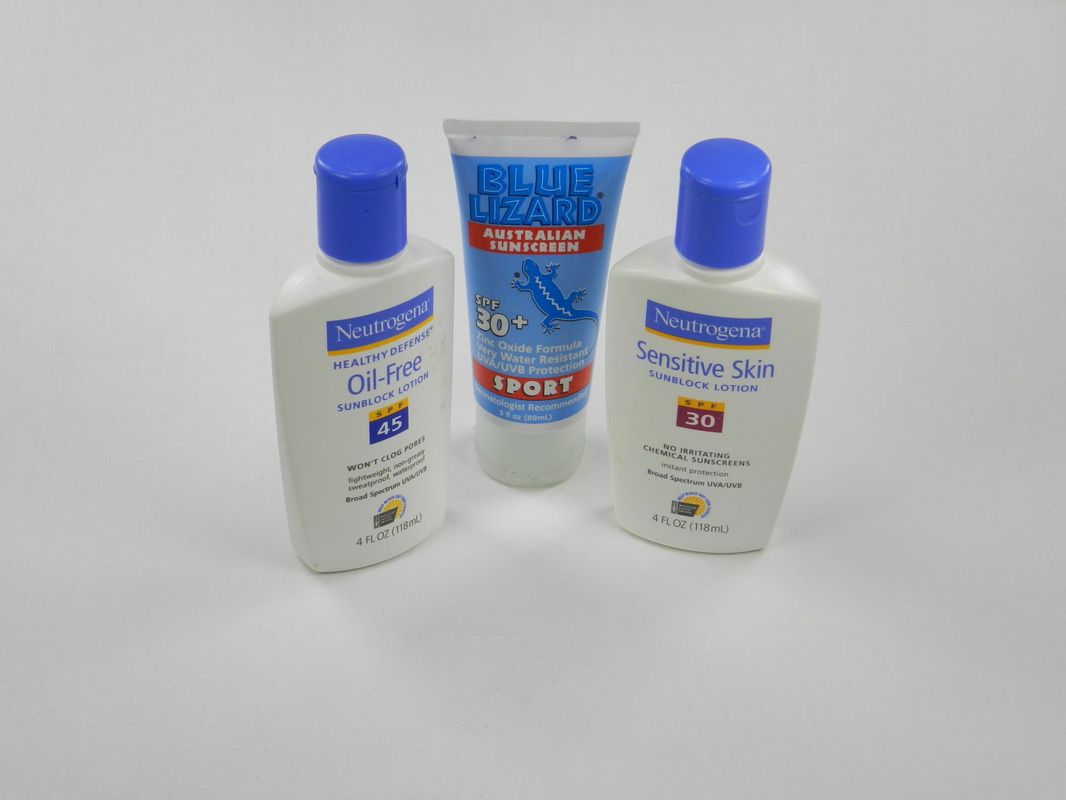
Miscellaneous – SPF as Required for Your Skin Type - at Least SPF 15
As all of us know, the sun can sneak up on you while hiking and it’s only the day after that you realize that you have a sunburn. Because of this we always take sunscreen with us on our hikes. From experience we have found that it’s better to have it and not use it than need it and not have it. The criteria that we use to evaluate sunscreen are: 1) SPF rating, 2) skin reactions, 3) sliminess and 4) breathability.
For those not familiar with the SPF (Sun Protection Factor) scale it is not linear:
As all of us know, the sun can sneak up on you while hiking and it’s only the day after that you realize that you have a sunburn. Because of this we always take sunscreen with us on our hikes. From experience we have found that it’s better to have it and not use it than need it and not have it. The criteria that we use to evaluate sunscreen are: 1) SPF rating, 2) skin reactions, 3) sliminess and 4) breathability.
For those not familiar with the SPF (Sun Protection Factor) scale it is not linear:
- SPF 15 blocks 93% of UVB rays
- SPF 30 blocks 97% of UVB rays
- SPF 50 blocks 98% of UVB rays
- SPF 15 (93% protection) allows 7 out of 100 photons through
- SPF 30 (97% protection) allows 3 out of 100 photons through.
Bug Spray/Insect Repellent
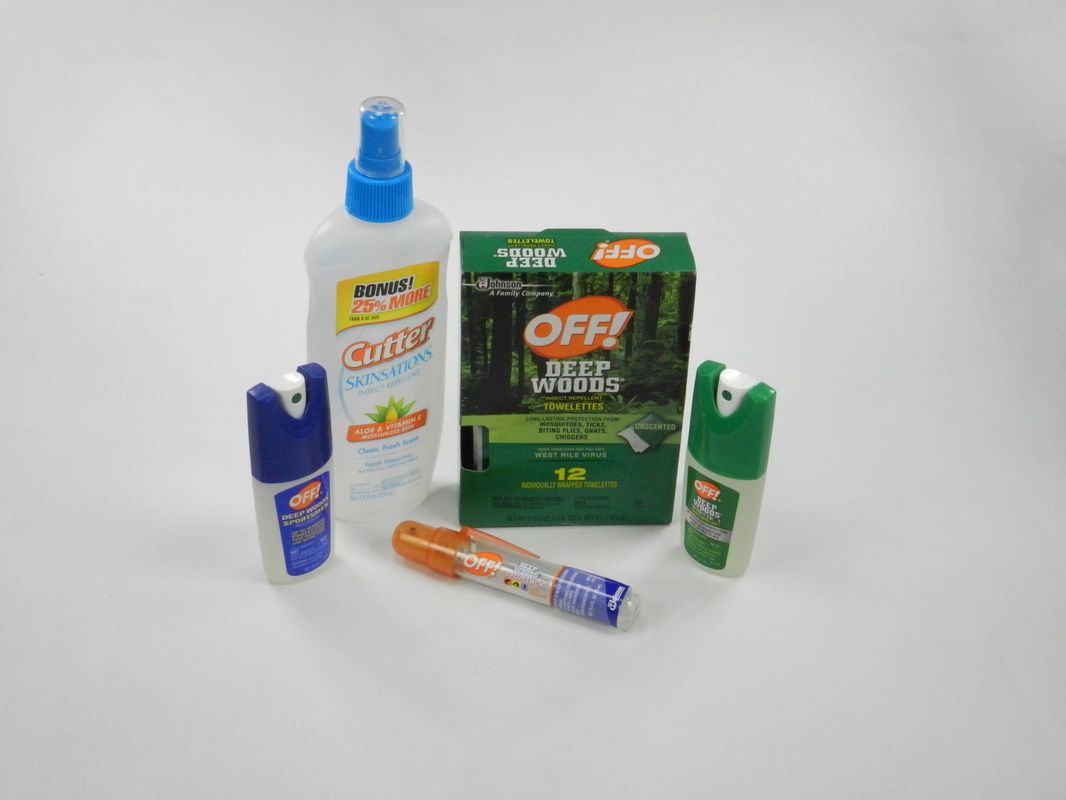
Miscellaneous – DEET Percentage Appropriate for the Area’s Climate
Although most of us use insect repellent to keep away the annoying bugs, these days, with West Nile Virus, Zika and other pest-borne health hazards, it’s a good idea to wear and carry insect repellent with you on hikes. Especially if you are hiking in a swampy or mosquito prone area. The criteria that we use to evaluate insect repellent are: 1) level of protection, 2) smell, and 3) feel on your skin. The most important criteria is the level of protection that the spray provides. For us that equates directly to the percentage of DEET in the spray. Over the years we have tried different active ingredients (to include homeopathic ingredients) but nothing seems to work as well as DEET. We normally use either “Off” or “Cutter” brand products since they come in a variety of sizes and forms. You can buy all sorts of bug spray/insect repellent at Amazon or your local stores.
Although most of us use insect repellent to keep away the annoying bugs, these days, with West Nile Virus, Zika and other pest-borne health hazards, it’s a good idea to wear and carry insect repellent with you on hikes. Especially if you are hiking in a swampy or mosquito prone area. The criteria that we use to evaluate insect repellent are: 1) level of protection, 2) smell, and 3) feel on your skin. The most important criteria is the level of protection that the spray provides. For us that equates directly to the percentage of DEET in the spray. Over the years we have tried different active ingredients (to include homeopathic ingredients) but nothing seems to work as well as DEET. We normally use either “Off” or “Cutter” brand products since they come in a variety of sizes and forms. You can buy all sorts of bug spray/insect repellent at Amazon or your local stores.
Small First Aid Kit
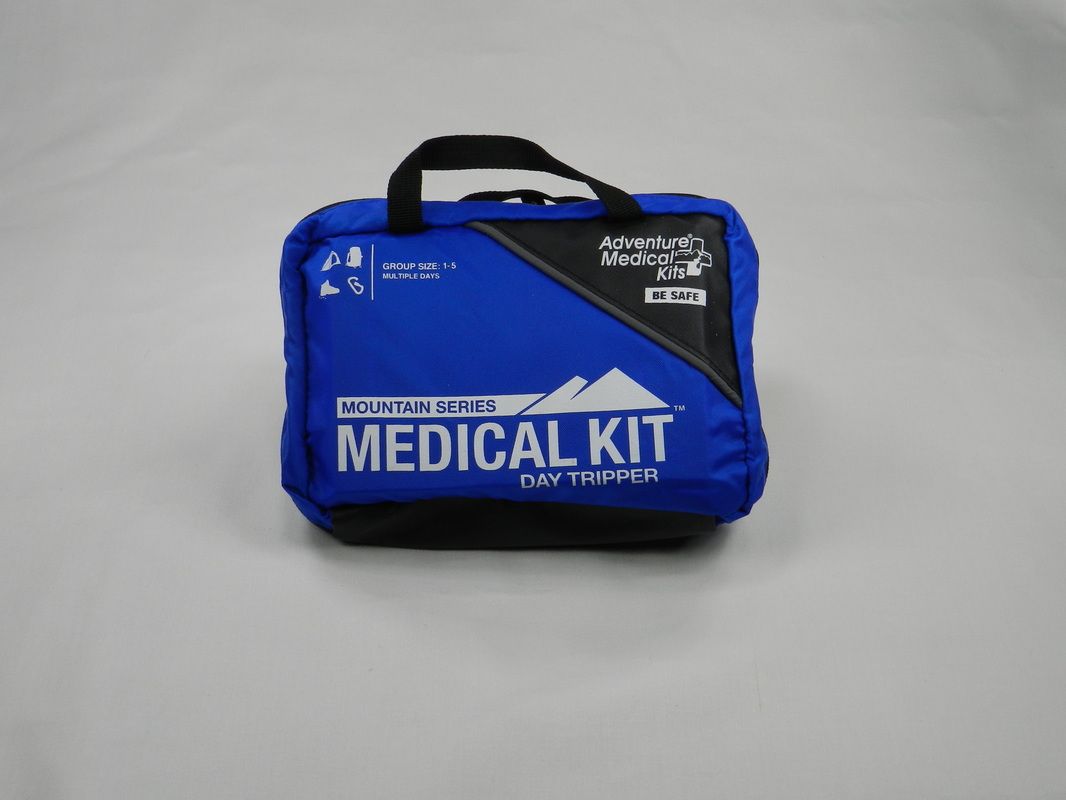
Adventure Medical Kits Day Tripper
Even on short hikes it makes sense to carry a small First Aid Kit since there is no other immediate help nearby. The criteria that we use to evaluate First Aid kits are: 1) completeness of First Aid items, 2) layout of items, 3) size, 4) weight and 5) price. We really like the thoughtfulness of the Adventure Medical Kits. They come is a wide variety of sizes and have the appropriate level of items for the types of injuries that you might need to treat. The “Day Tripper” kit measures 7.5" x 5.5" x 2.5", only weighs 1 pound and comes with the following items:
Even on short hikes it makes sense to carry a small First Aid Kit since there is no other immediate help nearby. The criteria that we use to evaluate First Aid kits are: 1) completeness of First Aid items, 2) layout of items, 3) size, 4) weight and 5) price. We really like the thoughtfulness of the Adventure Medical Kits. They come is a wide variety of sizes and have the appropriate level of items for the types of injuries that you might need to treat. The “Day Tripper” kit measures 7.5" x 5.5" x 2.5", only weighs 1 pound and comes with the following items:
- (3) Knuckle Fabric Easy Access Bandages
- (5) 1” x 3” Fabric Easy Access Bandage
- (4) Butterfly Closure Bandage
- (2) 4” x 4” Sterile Gauze Dressing Pkg./2
- (2) 2” x 2” Sterile Gauze Dressing Pkg./2
- (2) 2” x 3” Sterile Non-Adherent Dressing
- (1) Irrigation Syringe, 10cc. with 18 Gauge Tip
- (1) Skin Tac Topical Adhesive Wipe
- (1) 1” x 10yds Adhesive Tape
- (3) Triple Antibiotic Ointment
- (6) Antiseptic Wipe
- (1) Moleskin Blister Relief, Pre-Cut and Shaped (14 pieces)
- (2) Alcohol Swab
- (1) Cotton Tipped Applicator Pkg./2 Severe Bleeding
- (1) 5” x 9” Trauma Pad
- (1) Pair Nitrile Gloves Sprain / Strain
- (1) 2” Elastic Bandage with Hook and Loop Closure
- (3) Safety Pin Medication / Instrument
- (3) After Bite Bite and Sting Wipes
- (1) Splinter Picker/Tick Remover Forceps
- (2) Aspirin, Pkg./2 (325 mg.)
- (2) Antihistamine (Diphenhydramine 25 mg.)
- (2) Ibuprofen, Pkg./2 (200 mg.)
- (2) Diamode, Pkg./1 (Loperamide HCI 2 mg.)
- (2) Acetaminophen, Pkg./2 (500 mg.)
- (1) Wilderness & Travel Medicine: A Comprehensive Guide by Eric Weiss, M.D.
First Aid Instructions
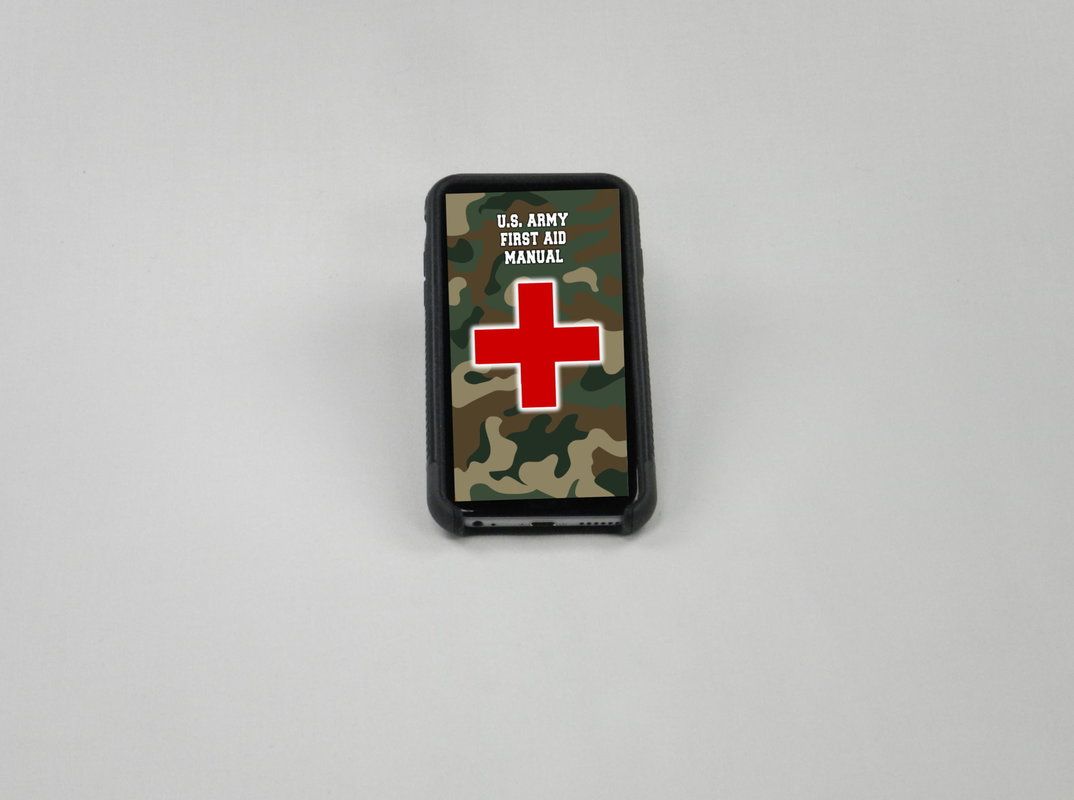
Army First Aid - by Double Dog Studios
Although the “Day Tripper” First Aid kit that we carry comes with the "Wilderness & Travel Medicine: A Comprehensive Guide" by Eric Weiss, M.D. book, we also like to carry a more comprehensive set of First Aid instructions with us. But in this case we carry it as an app on our phone rather than a book. The criteria that we use to evaluate First Aid apps are: 1) types of injuries covered, 2) level of detail of what to do to treat, 3) layout of information, and 4) clarity of instructions. We bought the Army First Aid by Double Dog Studios since it is well laid out and has step-by-step instructions on what to do when you can't call 911. If you look online you will find many recommendations for the Red Cross First Aid app - but in the backcountry this app would be virtually worthless since the third step in most of the treatment activities is "Dial 911" - which you obviously can not normally do when you are Hiking. You can buy this app at the Apple App Store and similar apps at the Google Play store.
Although the “Day Tripper” First Aid kit that we carry comes with the "Wilderness & Travel Medicine: A Comprehensive Guide" by Eric Weiss, M.D. book, we also like to carry a more comprehensive set of First Aid instructions with us. But in this case we carry it as an app on our phone rather than a book. The criteria that we use to evaluate First Aid apps are: 1) types of injuries covered, 2) level of detail of what to do to treat, 3) layout of information, and 4) clarity of instructions. We bought the Army First Aid by Double Dog Studios since it is well laid out and has step-by-step instructions on what to do when you can't call 911. If you look online you will find many recommendations for the Red Cross First Aid app - but in the backcountry this app would be virtually worthless since the third step in most of the treatment activities is "Dial 911" - which you obviously can not normally do when you are Hiking. You can buy this app at the Apple App Store and similar apps at the Google Play store.
Moleskin
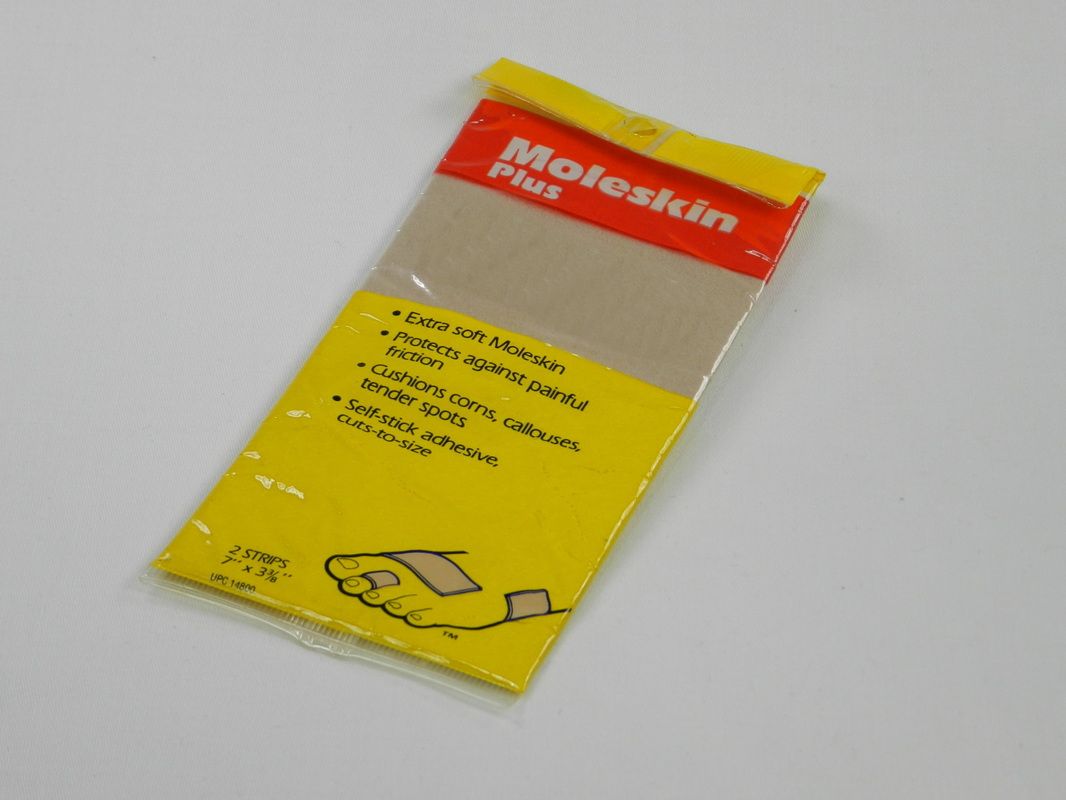
Dr. Scholl's Moleskin Plus
Nothing ruins a hike like blisters. Although having the right hiking boots and socks can prevent most foot problems and blisters, sometimes they happen. If they do, if you do not have the right materials to relieve the problem you either have to stop hiking or hike in pain that gets worse with every step. For most issues we find that Dr. Scholl's Moleskin Plus allows us to temporarily fix the problem while we are on the trail. Carrying it is well worth the weight. You can buy moleskin at Amazon or your local drug stores.
Nothing ruins a hike like blisters. Although having the right hiking boots and socks can prevent most foot problems and blisters, sometimes they happen. If they do, if you do not have the right materials to relieve the problem you either have to stop hiking or hike in pain that gets worse with every step. For most issues we find that Dr. Scholl's Moleskin Plus allows us to temporarily fix the problem while we are on the trail. Carrying it is well worth the weight. You can buy moleskin at Amazon or your local drug stores.
Lip Balm
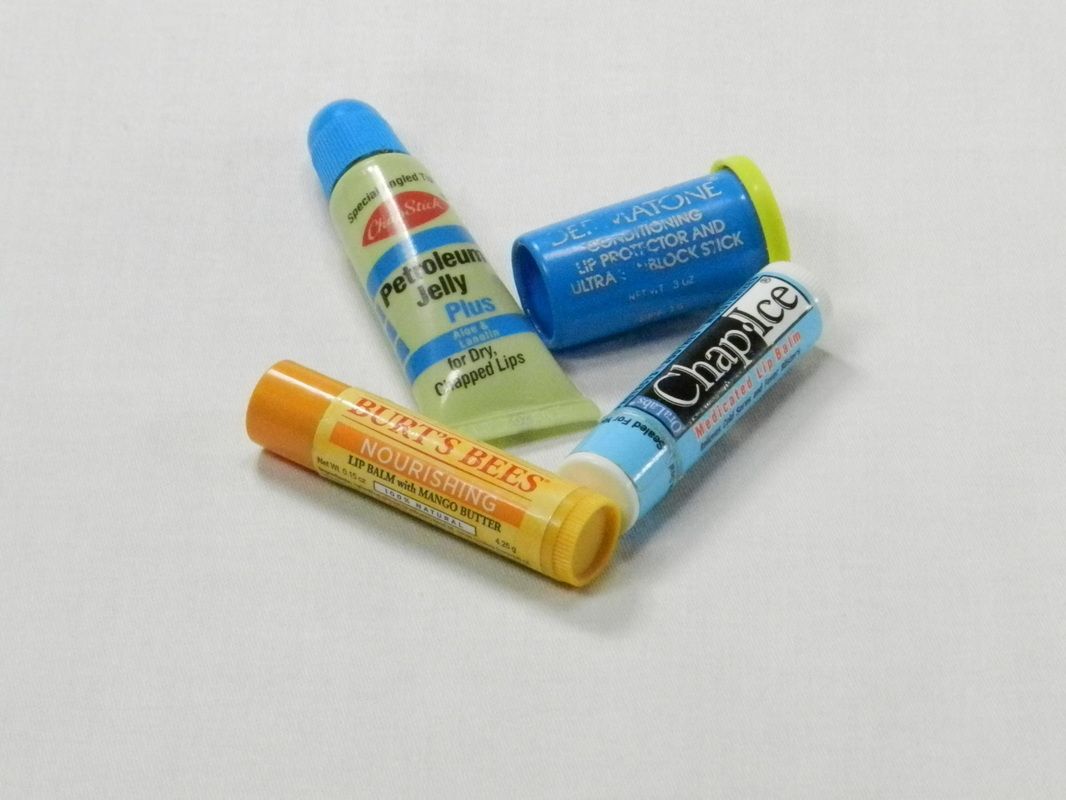
Miscellaneous - as Preferred
Like sunscreen lip balm is something that you normally don’t realize you need until it is too late since the sun and wind work on you every minute that you are outdoors. The criteria that we use to evaluate Lip Balm are: 1) protection provided, 2) feel on your lips and 3) medication in the balm. Since they are so small we generally let everyone take the lip balm that they prefer. We have an assortment that we choose from depending on the season (summer vs. winter), hiking terrain (sunny vs. windy) and current state of our lips (good vs. chapped). You can buy lip balm at Amazon or your local drug stores.
Like sunscreen lip balm is something that you normally don’t realize you need until it is too late since the sun and wind work on you every minute that you are outdoors. The criteria that we use to evaluate Lip Balm are: 1) protection provided, 2) feel on your lips and 3) medication in the balm. Since they are so small we generally let everyone take the lip balm that they prefer. We have an assortment that we choose from depending on the season (summer vs. winter), hiking terrain (sunny vs. windy) and current state of our lips (good vs. chapped). You can buy lip balm at Amazon or your local drug stores.